


Jungle Animal Hair Salon 2
3.92.04K Reviews
App Specs
- Version
- 8.0.20252
- Updated On
- License
- Free
- Downloads
- 10,000,000+
- Developer
- TutoTOONS
- Categories
- Educational
- Platform
- Android, iOS
Screenshots


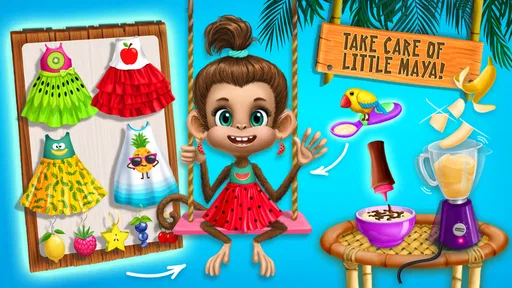
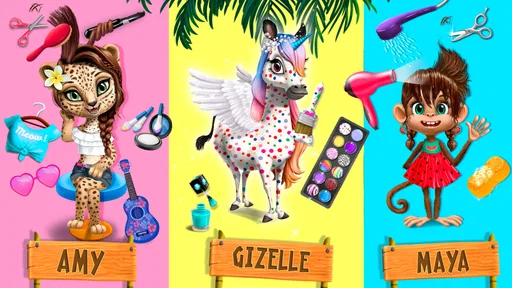




 Analysis by AppCompare
I found Jungle Animal Hair Salon 2 easy to understand within a few minutes, mainly because its idea is immediately clear: look after animal characters, change their appearance, and move through playful salon and beauty activities. It is an educational game from TutoTOONS, aimed at children, but I would describe it more accurately as a gentle creative-care experience than as a teaching tool with lessons or quizzes. The appeal comes from experimenting with hairstyles, outfits, beach-themed looks, and pet-care actions without the pressure of winning a difficult contest.
That distinction matters when deciding whether it belongs on a child’s device. I would recommend it to families looking for a relaxed activity that encourages choice, observation, and simple interaction. I would not choose it for a child who needs a structured curriculum, substantial reading practice, or a game with deep progression. Its strongest quality is the welcoming presentation; its main weakness is that the experience can feel repetitive once the novelty of dressing and grooming the animal characters has faded.
How the game feels to use across different abilities and situations
I’d use this section to look beyond whether a child can follow the basic salon idea and consider what makes play comfortable for them: screen size, pace, and how much guidance they want. In my view, a brief, shared first session is the most useful way to spot whether the visual choices feel inviting or overwhelming before deciding how the game fits into their routine.
Readability and navigation are strongest when a child can explore with guidance
The visual language is the first thing that makes the game approachable. The animal-salon theme gives each activity a recognizable purpose, so a child does not need to understand a complicated story before starting. Hair, clothes, beauty, and care are familiar ideas, and the bright character-focused presentation helps make the available choices feel inviting rather than intimidating.
In my experience, this kind of design works particularly well for children who are not confident readers yet. The game’s appeal is carried by pictures and direct manipulation, not by long instructions. A parent can sit beside a child, demonstrate one action, and then let the child continue independently. That makes it useful during a short after-school break or while travelling, when a child wants something more interactive than a video but is not ready for a text-heavy game.
There is still a difference between recognizing an attractive button and knowing what it will do. Younger players may tap around before understanding the relationship between a character, a salon activity, and the next screen. I would treat the first session as a shared introduction rather than assuming every child will navigate it alone immediately. Once the basic rhythm makes sense, the visual theme does much of the explaining.
The absence of complicated rules is helpful for children who become frustrated by failure screens or timed challenges. A child can focus on choosing and caring for the animals instead of remembering several objectives at once. That low-pressure structure is one of the game’s practical strengths, especially for players who need more time to process instructions or who prefer repeating familiar actions.
Worth Reading Before You Choose

EA SPORTS FC Mobile 26 Is a Bigger Football Game, but It Takes Time

Flipboard Shows What News Apps Must Do Beyond the Feed

Switching to Android Auto Means Rethinking Your Driving Routine

Google Calendar Makes a Crowded Week Easier to Manage

Ludo King Makes the Most of the Minutes Between Plans

Baby Panda World Brings Quick Play to Modern Phones, but Its Game Library Feels Busy
On the other hand, the same simplicity limits the game’s value for older children. A confident reader may find that there is not enough discovery in the navigation itself. Compared with an educational app built around phonics, mathematics, or puzzles, this is much more about visual play and personal expression. I would present it as a creative activity with educational elements, not as a replacement for a focused learning program.
Motor and sensory considerations depend on the child’s preferred way to play
The central interactions are naturally suited to touch-screen play. Children can select an animal, choose a look, and carry out care-oriented actions through direct taps or gestures. That immediacy is useful for a child who understands a task better by doing it than by listening to an explanation. It also lets a parent observe what the child can manage without turning the session into a formal test.
For children developing hand control, the game can offer light practice in aiming at visible objects and coordinating a choice with an on-screen result. I would keep expectations modest: this is not a dedicated fine-motor therapy tool. Its value is that the movements are attached to an enjoyable goal, so a child may willingly repeat them longer than they would repeat an exercise presented as practice.
Some children will find the colorful presentation motivating, while others may become overloaded by a busy screen or lose focus when several visual choices compete for attention. I would watch the child rather than assume that bright graphics are automatically accessible. If the player starts tapping randomly, abandons a task quickly, or becomes upset by the amount of activity on screen, shorter sessions and adult guidance may help more than simply increasing the difficulty.
The game is also a better fit for children who enjoy open-ended appearance choices than for those who need a predictable, step-by-step routine. A child who wants one correct answer may not understand why changing a hairstyle or outfit is the point. I have found that explaining the goal as “make your own version of the animal” works better than asking the child to complete it perfectly.
Parents should also consider the physical setup. A small phone held close to the face may be less comfortable for a child who needs a larger view, while a tablet can make touch targets easier to see and reach. That is not a special feature of the game, but it changes the experience substantially. A stable surface, comfortable posture, and a short play period can make the same activity feel far more manageable.
Situational access makes it useful as a short, supervised activity
I can imagine using this game during a quiet moment at home when a child wants to make choices but the family does not want a competitive title. It also suits a waiting-room situation or a journey, provided the device is prepared in advance and the child is comfortable playing on that screen. The simple theme means an adult can explain the premise quickly without needing to read a long tutorial aloud.
A particularly useful routine is to let the child choose one animal and describe the plan before touching the screen: which look should come first, what colors seem friendly, or what care action the character might need. That turns a purely visual activity into a small conversation about sequencing, preferences, and cause and effect. The game does not need to carry all the educational value by itself; a parent can add language and social interaction around it.
It can also work well for siblings with different confidence levels if they take turns making choices. The younger child can select an outfit or hairstyle, while the older child explains the next step without taking over. I would avoid turning this into a competition, because the game’s relaxed appeal is weakened when one player controls every decision. Shared play is most successful when each child gets a clear moment to direct the animal’s makeover.
For independent play, I would begin with a short trial. Some children will quickly understand the pattern and continue happily; others may need an adult to interpret what the icons mean. The fact that the game is rated Everyone makes it broadly suitable as a family-friendly title, but that does not mean every child will find every screen equally easy. Age, reading ability, attention span, and comfort with touch controls still matter.
The game is free to start, which makes it convenient for testing whether the style suits a particular child. Families should remember that optional purchases range from about a dollar and a half to around one hundred sixty dollars per item. I would review the purchase settings before handing over the device, especially if a child can access the store independently. The free entry point is useful, but it should not be confused with an entirely cost-free experience.
Remaining barriers are more about depth, repetition, and control than basic understanding
The biggest barrier I noticed is not that the premise is difficult; it is that the game may not provide enough variety for every player. Children who love styling and pretend-care activities can return to the same kind of interaction repeatedly, but players who need a clear sense of progress may soon ask what comes next. If your child prefers building, solving, reading, or collecting through a long-term system, another title may hold attention better.
There is also a possible mismatch between the word “educational” and what the child actually learns. The game can encourage choice-making, visual attention, simple sequencing, and imaginative play. Those are worthwhile outcomes, but I would not use it to practise a specific school skill. A parent looking for letter recognition, counting exercises, or measurable academic progression should choose an app designed around that purpose instead.
In-app purchases are another practical concern. Even when a child is only interested in the free portion, attractive customization options can create pressure to unlock more. I would set a clear rule before play begins: the child can explore what is available, but purchases require an adult decision. This is especially important because the range extends from a small optional item to a very high-priced purchase, and a young player may not understand the difference between tapping a decorative option and committing money.
Device compatibility is reasonably broad for a modern family device because the game requires Android 6.0 or later. Still, compatibility does not guarantee an equally comfortable experience on every screen. Older hardware, limited storage, or a device shared with school and communication apps can affect whether installing another game is worthwhile. I would check the child’s actual device rather than relying only on the age rating.
Children with motor difficulties may need more time or physical support when selecting small visual targets. Children with sensory sensitivities may prefer a dimmer room, lower volume, or shorter sessions, depending on how they respond to the presentation. I would not promise that the game solves these issues, because it does not replace system-level accessibility tools or individualized support. Its advantage is simply that the basic concept is easy to explain and does not depend on advanced reading.
For children who use assistive technology, families should test the game directly with the particular setup. Touch interaction may be comfortable for one player and impractical for another. Likewise, a child who relies on spoken instructions may need an adult to translate the visual flow. These are not reasons to dismiss the game automatically, but they are reasons to make the first session a trial rather than an assumption.
How it compares with ordinary alternatives in children’s games
Compared with a traditional dress-up game, this title adds the animal-care and salon framing, which gives the child more context for changing an appearance. The character is not just a blank model waiting for clothes; the child is invited into a playful care scenario. That can make the activity feel warmer and more purposeful, particularly for children who respond to animals more readily than to abstract customization screens.
Compared with pet simulators, it appears less demanding as a daily responsibility. I would prefer that for a younger child who wants immediate play rather than reminders, schedules, or a long-running virtual relationship. The trade-off is that a child seeking a deeper pet simulation may find the experience too light. It provides a themed burst of interaction rather than a complex world that grows around the player.
Compared with academic learning games, it is easier to enter but less targeted. There is no need to prepare a child for a lesson, yet there is also less reason to expect progress in a defined subject. My practical recommendation is to use it alongside, not instead of, reading, drawing, physical play, or a carefully chosen learning app. Its best role is a creative change of pace.
Compared with video content, the child has more agency because the animal’s appearance reflects the child’s decisions. That makes it a better choice when you want active participation. However, it is not automatically better for every child: a player who becomes overwhelmed by choices may find a calm story easier to follow. The right comparison is not “interactive is always superior,” but whether the child benefits from making the decisions themselves.
What the current release means for choosing it today
The game was released on March 29, 2017, and its current version is 8.0.20252. That gives parents a useful sense of its place in the children’s-game landscape: it is an established title rather than a brand-new experiment. Its visibility is reflected in more than ten million installs, while its average store rating is 3.9 from roughly forty-two thousand ratings and about two thousand written reviews.
I read those figures as evidence of broad interest, not as a guarantee that every child will enjoy it. A large install base can tell me that the concept has reached many families, while the middling average rating is a reminder to keep expectations realistic. The game’s audience is specific: children who enjoy animal characters, appearance changes, and uncomplicated care activities. Outside that audience, the same design may feel shallow or repetitive.
TutoTOONS is the developer, and the game remains free to install. That combination makes it easy to try without committing to a purchase at the outset. My advice is to test the opening experience with the intended child, observe whether the navigation feels comfortable, and decide afterward whether the available activity is enough. This is a better method than choosing it solely because it is popular or labeled educational.
My inclusive verdict for families
I would recommend Jungle Animal Hair Salon 2 to families wanting a friendly, low-pressure game that invites children to style animal characters and practise simple touch interaction. It is especially suitable for a child who enjoys visual choices, pretend salon play, and short creative sessions. The clear theme can support children who are still developing reading confidence, while an adult can easily add conversation, turn-taking, and sequencing around the play.
I would skip it when the main goal is academic instruction, advanced accessibility support, complex progression, or a long-lasting simulation. I would also be cautious with children who are easily overstimulated by colorful screens or frustrated by open-ended choices. In those cases, a quieter, more structured alternative may be a better match, even if this game is technically age-appropriate.
My final view is positive but measured: its accessibility comes from simplicity and visual immediacy, not from a promise that every child will interact with it in the same way. Try it on the child’s actual device, stay nearby for the first session, and set purchase boundaries before play begins. If the child enjoys making the animals look different and can navigate the activities comfortably, this free educational game can be a pleasant addition to a balanced collection of children’s apps.
Pros
- Bright
- colorful graphics appeal to younger children.
- Simple touch controls are easy for preschoolers to understand.
- Several animal characters offer variety during play.
- Creative grooming activities encourage imaginative play.
- Works well for short
- casual play sessions.
Cons
- Some activities may feel repetitive after several sessions.
- Frequent prompts can interrupt the flow of gameplay.
- Certain content may require in-app purchases to unlock.
- The game offers limited challenge for older children.
- Sound effects and music may become distracting over time.
FAQs for Jungle Animal Hair Salon 2
What is Jungle Animal Hair Salon 2?
Jungle Animal Hair Salon 2 is a colorful, child-friendly makeover game in which players care for and style adorable jungle animals. You can wash, dry, brush, cut, color, and decorate their hair while choosing accessories and playful outfits. The game is designed around simple touch controls, creative experimentation, and entertaining animal reactions rather than complicated challenges or competitive gameplay.
How do you play Jungle Animal Hair Salon 2?
Gameplay is based on selecting an animal and completing different salon activities with on-screen tools. Depending on the character, you may clean messy fur, trim hair, apply colors, add decorations, and finish the look with accessories. The controls are straightforward and suitable for younger players, with tap, drag, and swipe actions guiding most interactions. There is no need for advanced gaming experience.
Is Jungle Animal Hair Salon 2 suitable for children?
The game is generally aimed at young children and families because it uses bright visuals, friendly animal characters, uncomplicated tasks, and non-violent salon activities. It encourages creativity and pretend play without demanding reading-heavy instructions or difficult reflexes. Parents should still review the app’s current age rating, advertising, and in-app purchase settings before allowing younger children to play independently.
Does Jungle Animal Hair Salon 2 require an internet connection or contain purchases?
Basic salon activities may be playable without a constant internet connection, but some features can depend on the version installed, advertising systems, or content that is downloaded after installation. The game may also include optional in-app purchases or advertisements. To avoid accidental spending, especially on a child’s device, check the store listing and configure parental controls before downloading or handing over the device.
Is Jungle Animal Hair Salon 2 free to download?
Jungle Animal Hair Salon 2 is commonly offered as a free download, although availability and pricing can vary between Android and iOS stores or by region. A free installation does not always mean every character, tool, or accessory is unlocked. Before installing, review the store page for the latest information about supported devices, permissions, advertisements, optional purchases, and any premium version or subscription details.


